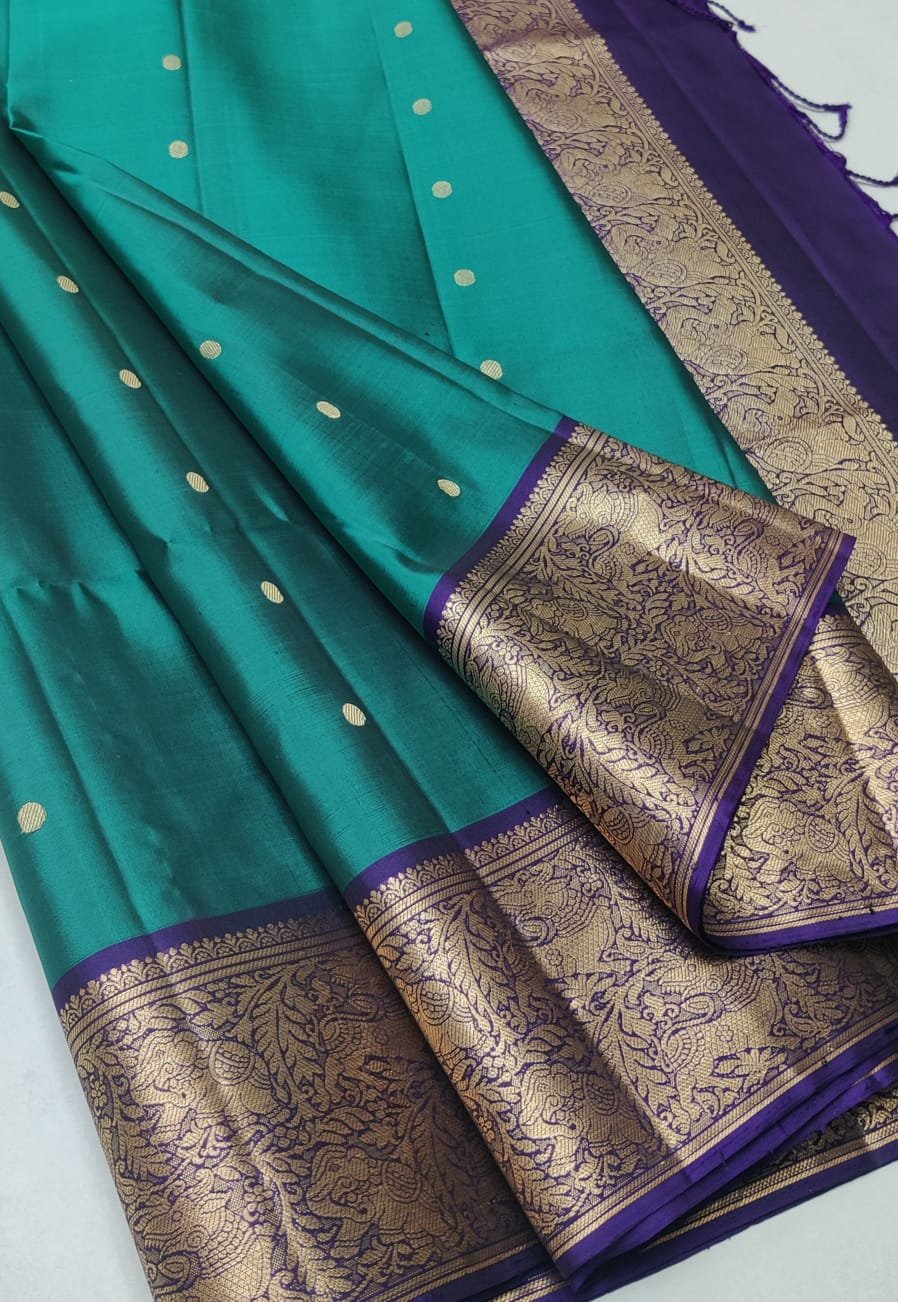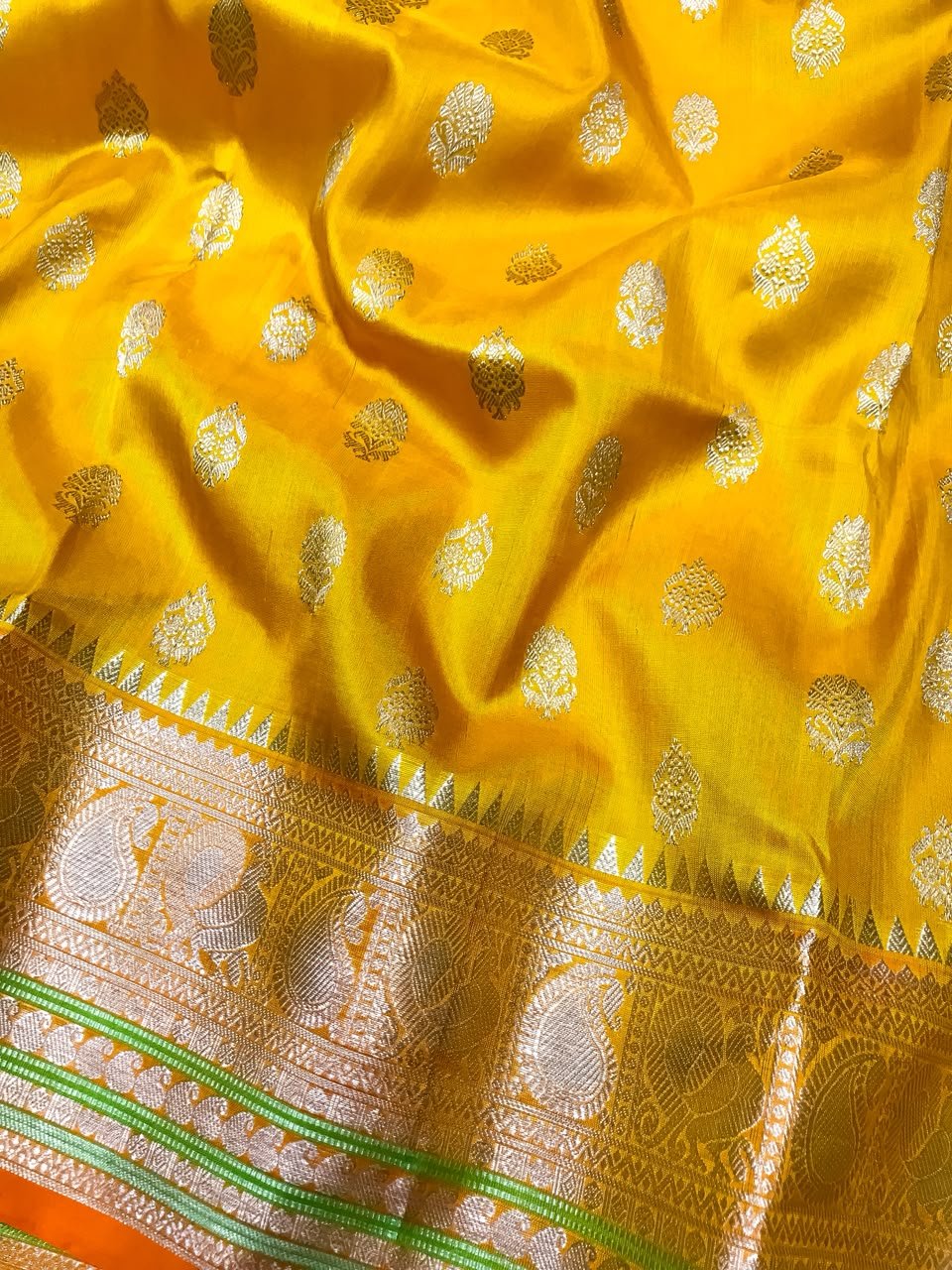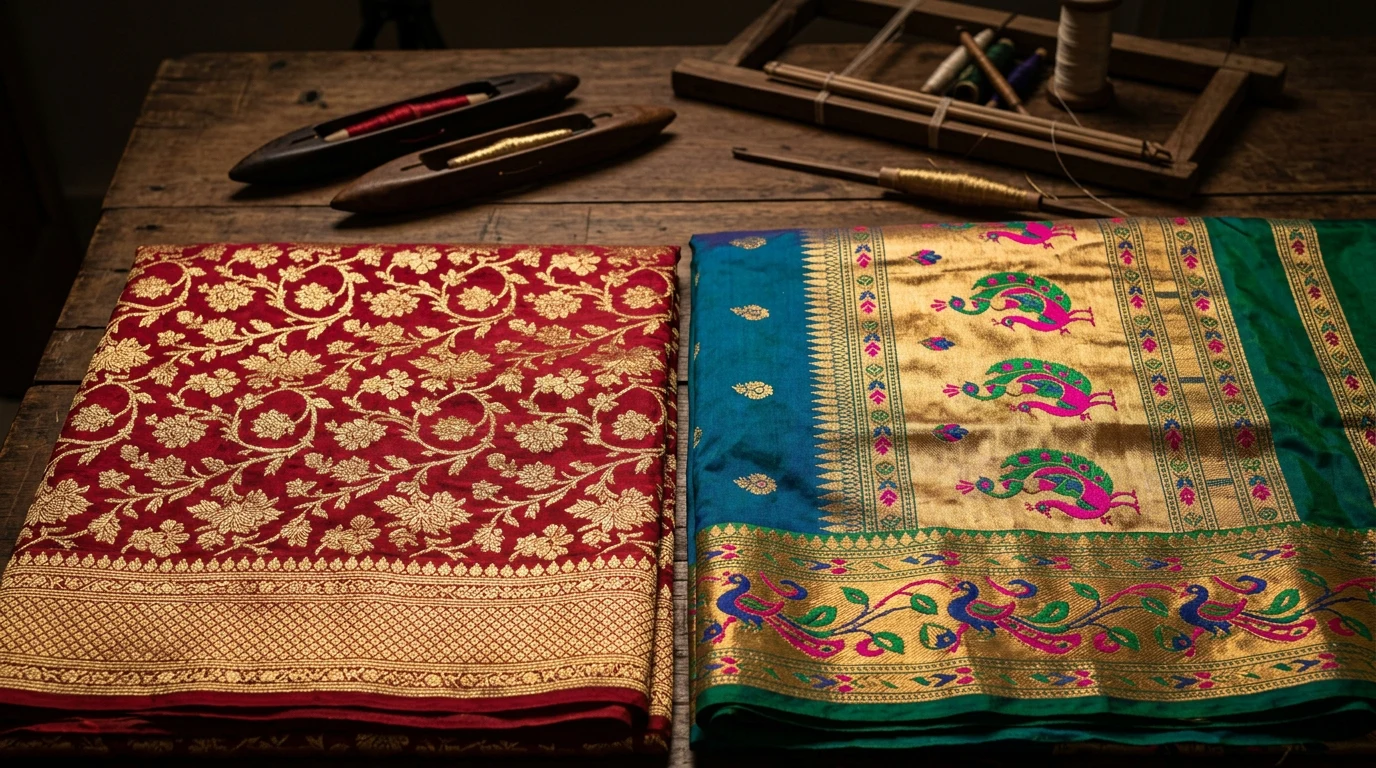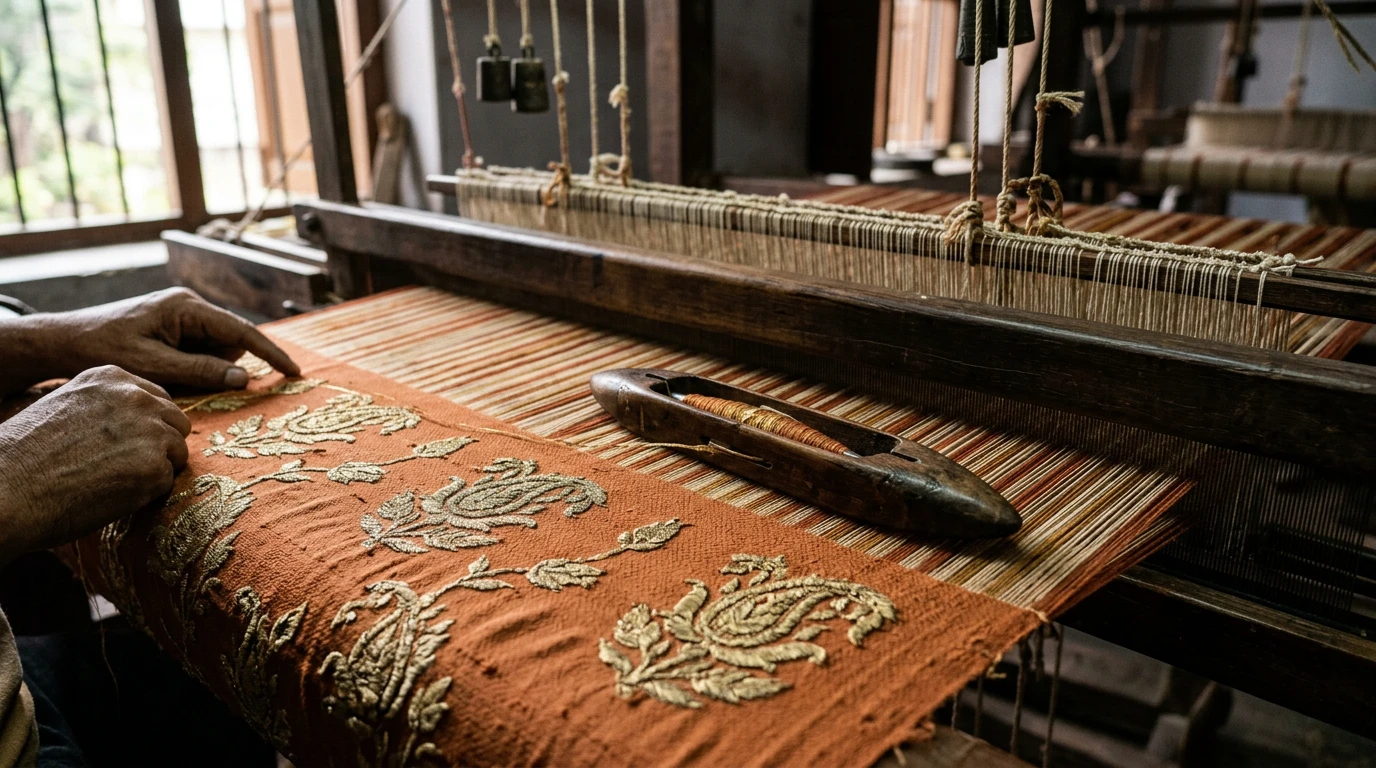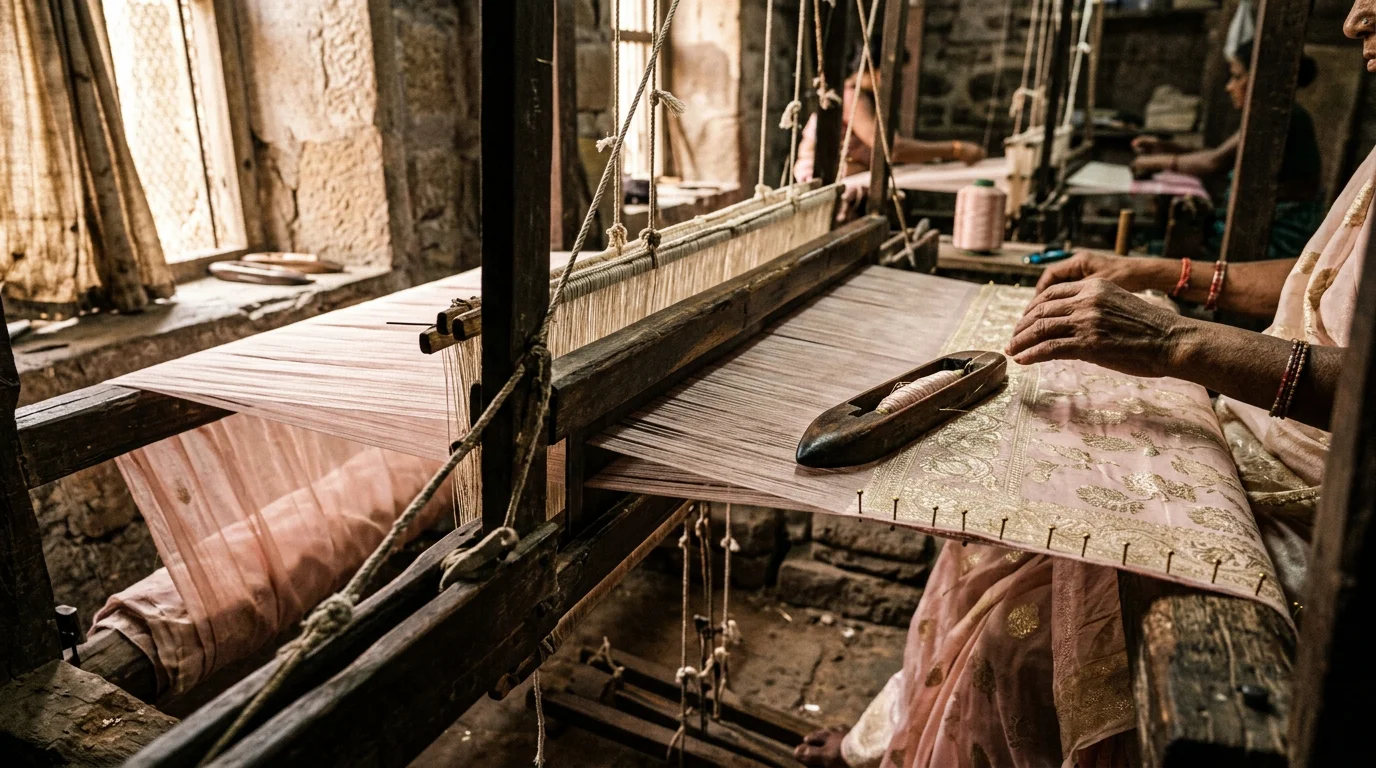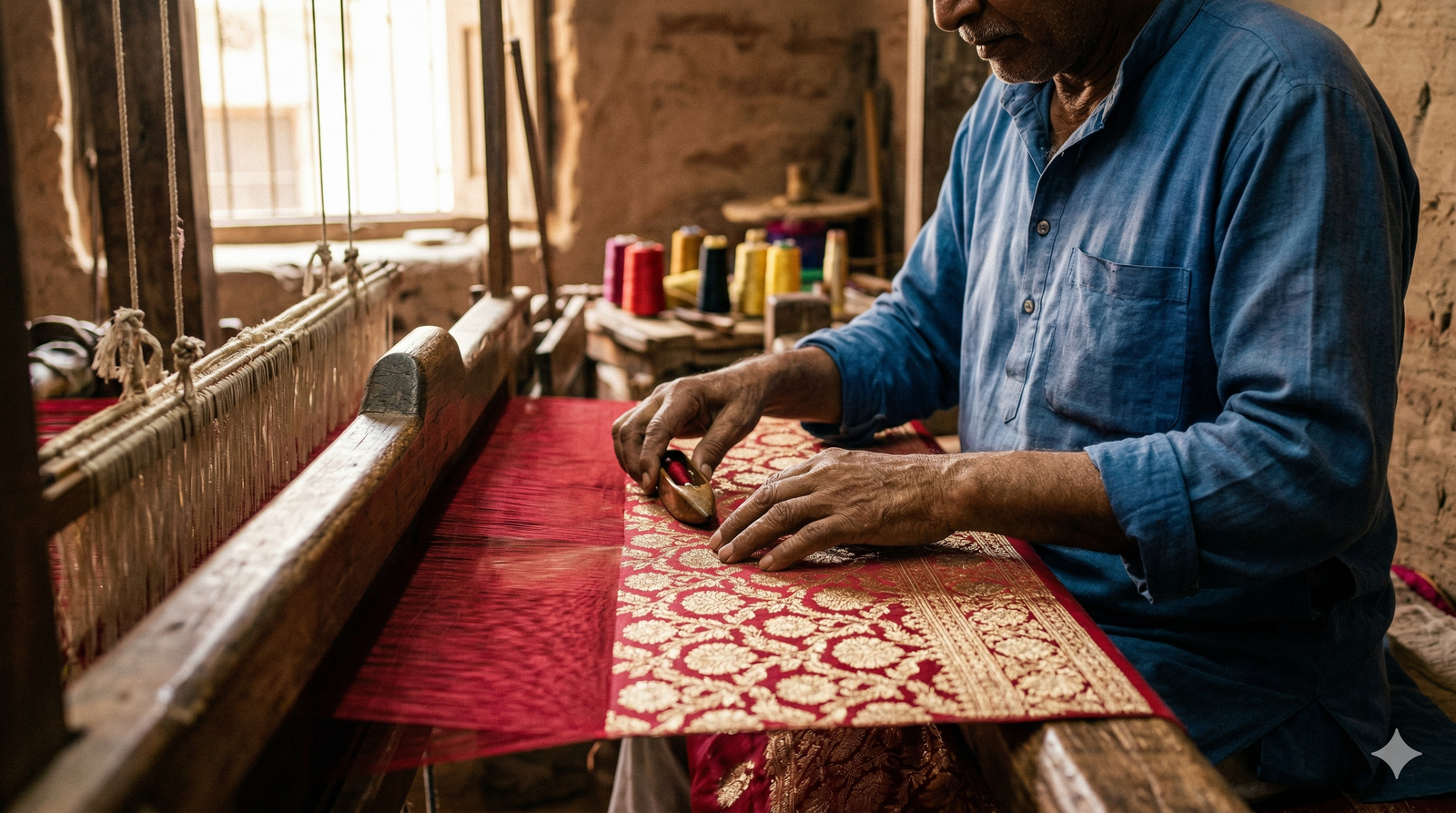
The rhythmic khacha-khach of the handloom echoes through the narrow lanes of Varanasi, a heartbeat that has pulsed for centuries. To drape a Sutvani Banarasi Saree is not merely to wear a garment; it is to wrap oneself in a legacy of divine craftsmanship. From the Vedic era to the Mughal courts, the evolution of the Banarasi weave is a testament to India's status as the world’s cradle of luxury textiles.
The Sacred Origins: From Hiranya Vastra to Mughal Magnificence
The roots of the Banarasi weave stretch back to ancient scriptures. In the Rigveda, mention of Hiranya Vastra (cloth of gold) hints at the early mastery of metallic embellishments. However, the Banarasi saree as we recognize it today underwent a metamorphosis during the 14th to 16th centuries.
Under the patronage of the Mughal Emperors, particularly Akbar, Persian floral motifs merged with indigenous Indian patterns. This era introduced the Zari—threads of real gold and silver—transforming the humble cotton weave into a high-density silk masterpiece. Today, SUTVANI honors this lineage by working directly with Master Artisans in Varanasi, ensuring every 6-yard drape maintains the historical integrity of the Ganga-Jamuni Tehzeeb.
The Anatomy of Authenticity: Kadhua vs. Meenakari
For the discerning collector, understanding the technical nuances of a weave is essential. SUTVANI's collection is defined by two pinnacle techniques:
1. The Kadhua Technique
Unlike mass-market "cutwork" sarees where threads are lopped off at the back, Kadhua is the "Haute Couture" of handlooms. Each motif is individually woven into the fabric. There are no loose threads on the reverse side, resulting in a cleaner drape and a higher GSM (Grams per Square Meter) of silk.
2. The Meenakari Marvel
Borrowing from the jeweler’s art, Meenakari involves using multi-colored silk threads within the Zari motifs. This creates a vibrant, jewel-toned effect that mimics enamel work on gold.
Comparative Analysis: Identifying True Luxury
In an era of "Art Silk" and "Powerloom" imitations, knowing the difference is vital for your investment.
| Feature | SUTVANI Pure Katan Silk | Mass-Market Art Silk (Synthetic) |
| Material | 100% Natural Mulberry Silk | Polyester or Rayon Blends |
| Zari Quality | Tested Metallic / Silver-Electroplated | Plastic-coated Lurex |
| Touch/Feel | Cool, buttery, and breathable | Static-heavy and waxy |
| Longevity | Heirloom quality (50+ years) | Degrades after 3-4 wears |
| Certification | Silk Mark Certified | None |
The Cultural Significance: Why Banarasi Remains the "Queen of Silks"
The Banarasi saree is intrinsically linked to the "Sola Shringar" (16 adornments) of an Indian bride. Its weight signifies the gravity of tradition, while the intricate Bel (creeper) and Buti (floral sprig) patterns represent the fertility and prosperity of the land. At SUTVANI, we guarantee an Authenticity Certificate with every purchase, bridging the gap between the weaver's pit-loom and your global wardrobe.
Caring for Your Heirloom
To ensure your silk remains as luminous as the day it was woven:
-
Storage: Wrap in a breathable muslin cloth; never use plastic.
-
Refolding: Change the fold lines every 3 months to prevent Zari breakage.
-
Cleaning: Professional dry clean only.
The Sutvani Soul
Sadiyon ka virsa, reshmi dhaagon ki zubaan,
Sutvani pehne toh lage, jaise dhal gaya ho aasmaan.
(A heritage of centuries, spoken in threads of silk,
To wear Sutvani is to feel as though the heavens have draped themselves upon you.)